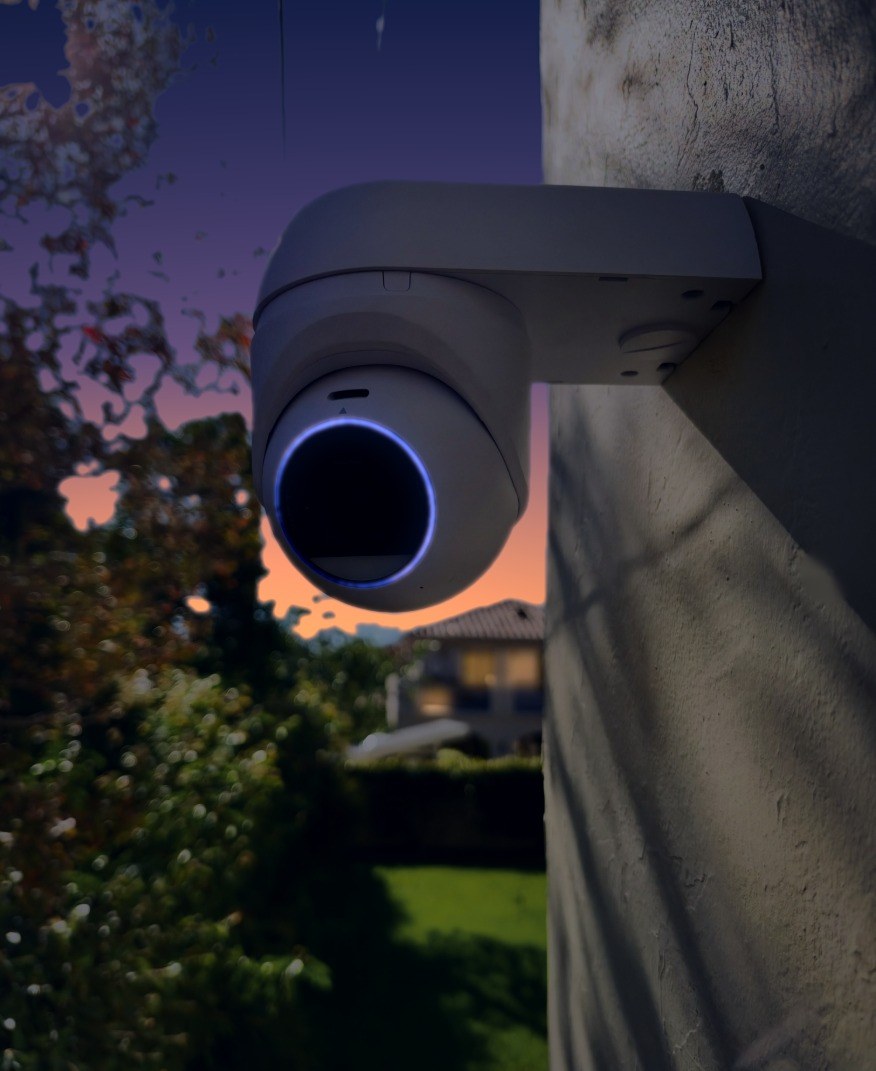
Security camera specs can be overwhelming. Every box promises sharper video and smarter alerts. But a camera that looks great on paper can still miss the license plate, flood your phone with false alerts or stop recording when the Wi-Fi drops. Here is what we look at when we design a camera system.
Resolution: more is not always better
Higher resolution means more detail, which helps you zoom in on a face or a license plate. For most homes, cameras in the 4 to 8 megapixel range (8 megapixels is often called 4K) are the sweet spot.
But resolution is only part of the story. The lens and where the camera is placed matter just as much. A wide-angle camera covering an entire yard spreads its pixels thin; a camera aimed at a specific area — the front walk, the driveway entrance — captures far more useful detail.
Pro tip: Plan cameras around what you need to see. One camera to watch a whole area and another closer to capture faces at the door is usually better than one camera trying to do both.
Night vision
Most of the activity you care about happens after dark, so night performance matters.
- Infrared (IR) night vision lights the scene with invisible infrared light and records in black and white. It works in complete darkness.
- Color night vision uses more sensitive sensors, sometimes with a small built-in light, to record in color at night. Color makes it easier to describe a car or clothing.
Outdoor lighting helps every camera. Even modest porch, landscape or motion-activated lighting can dramatically improve what your cameras capture.
Wired or wireless?
Wired cameras use a single network cable — called Power over Ethernet, or PoE — for both power and data. They do not need batteries or an outlet, they do not depend on Wi-Fi and they record continuously. For a permanent system, wired is our first choice.
Wi-Fi and battery cameras are easy to place where running a cable is not practical. The trade-off is that they depend on your Wi-Fi signal, batteries need charging, and many battery cameras record short clips rather than continuously to save power.
Where the video is stored
- Cloud storage saves video to the manufacturer's servers. It is convenient, but some systems require a monthly subscription to save and review recordings.
- Local storage saves video to a recorder (often called an NVR) in your home. Your video stays with you, and there are typically no monthly fees.
Many systems combine the two. We like local recording for wired systems because it keeps recording even if the internet goes down.
Smart alerts
Modern cameras can tell the difference between a person, a vehicle, an animal and a tree blowing in the wind. That matters, because a system that alerts you every time a branch moves quickly gets ignored. Look for person and vehicle detection, and the ability to set zones so a camera ignores the street or a neighbor's yard.
You stay in control
Our systems are self-monitored: alerts come straight to your phone, and you can check live video or review recordings from anywhere. There is no monitoring contract — you decide what matters and what to do about it.
Be a good neighbor
Aim cameras at your own property, avoid pointing them into a neighbor's windows or yard, and check local rules before recording audio. Good placement protects your home without creating problems next door.
How we help
We walk the property with you, decide what each camera needs to see, and design a system with the right cameras, lighting, storage and alerts. Then we install and set it up so it is easy to use from day one.
Learn more on our Security & Surveillance page, or schedule a consultation for a walkthrough.