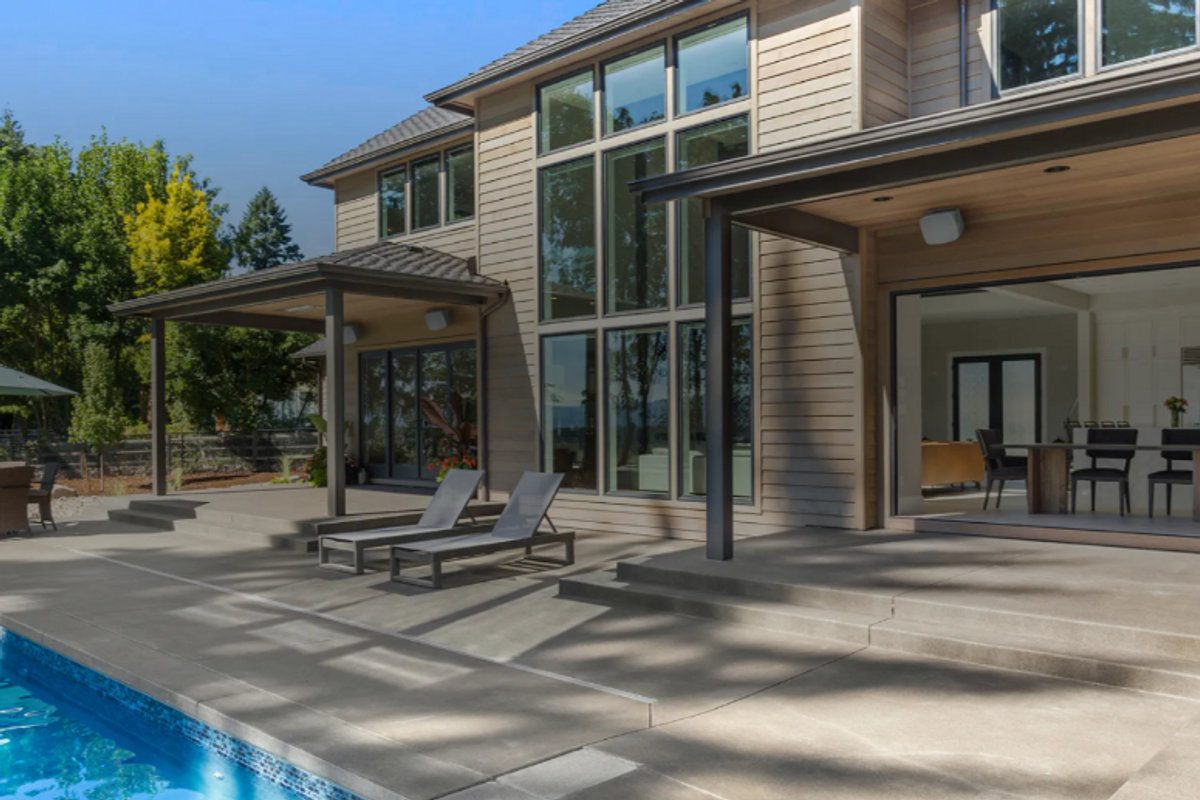
Outdoor living spaces have become an extension of the home — covered patios, screened porches, pool decks and outdoor kitchens. Adding a TV and music makes them even better. But Ohio weather is hard on electronics: humid summers, heavy rain, pollen and dust, and winters that drop well below freezing. Here is how to choose equipment that holds up.
Why an indoor TV does not belong outside
It is tempting to hang a regular TV on the porch. The problems show up quickly:
- Moisture and humidity get inside and corrode the electronics.
- Temperature swings stress components that were designed for a living room.
- Bugs and dust find their way into vents.
- Brightness — an indoor TV looks washed out in daylight.
Indoor TVs used outdoors usually fail early, and the damage is typically not covered by the warranty.
Choosing an outdoor TV
Outdoor TVs are sealed against water and dust and built for a wider range of temperatures. Samsung's The Terrace, for example, carries an IP55 rating for dust and water resistance.
The most important decision is how much sun the screen will see:
- Partial-sun models are designed for covered or shaded spaces, like a covered patio or porch.
- Full-sun models are brighter and built for screens that sit in direct sunlight.
Pro tip: Choose the TV for the sunniest moment you plan to watch it. A screen that looks great in the evening can be hard to see at 2 p.m. on a July afternoon.
Understanding IP ratings
An IP (Ingress Protection) rating tells you how well a product is sealed. The first number covers dust and solids; the second covers water. Higher numbers mean more protection. For anything exposed to rain, look for a rating designed for outdoor use, and check the manufacturer's guidance on direct sun, temperature range and mounting.
Choosing outdoor speakers
Outdoor speakers are built with weather-resistant materials and sealed electronics so they can handle rain, sun and freezing temperatures year-round. A few things to consider:
- Under-eave or wall-mount speakers tuck under a roofline for protection and are great for patios and decks.
- Landscape or rock speakers blend into garden beds and spread sound evenly across a yard.
- Outdoor subwoofers, including in-ground models, add the fullness that small outdoor speakers lack.
Spread several speakers around the space at a moderate volume rather than pointing two speakers at the yard and turning them up. You get better sound for your guests and less noise for your neighbors.
Plan the power and network
Outdoor TVs and speakers need weatherproof outlets, a strong Wi-Fi or wired connection and a safe path for cables. Running conduit before a patio is poured or a deck is finished saves a lot of trouble later.
Make it easy to use
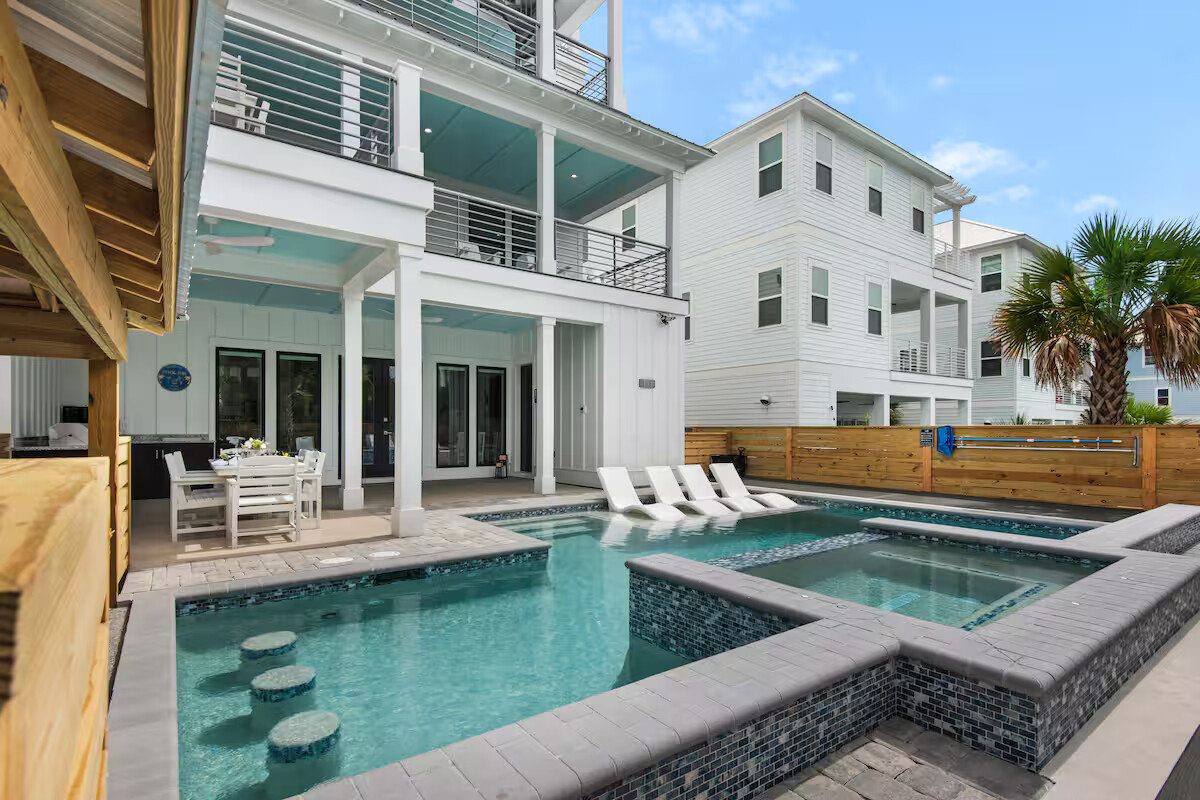
The best outdoor setups turn on with one button or a voice command and work from the same app as the rest of the home. With multi-room audio, music can follow your guests from the kitchen straight out to the patio. We did exactly that with Klipsch outdoor speakers by the pool in our Florida vacation home project.
How we help
We plan outdoor entertainment around how you use the space: where people sit, how much sun the screen gets and where the sound needs to reach. Then we choose equipment that is built to last.
Explore our Audio / Video page, or schedule a consultation to plan your outdoor space.